
Adventures in Acting: “living truthfully under imaginary circumstances”
Updated: Oct 12
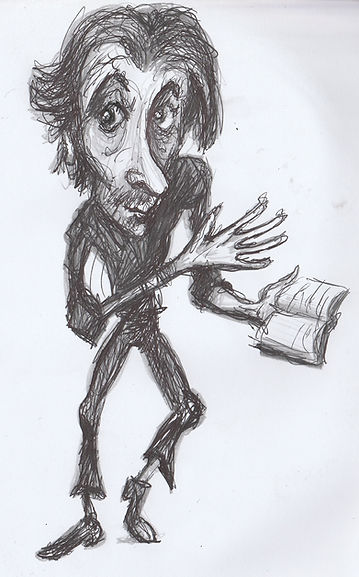
Some notes upon my personal experience with acting, mostly for my own reference and reflection – to be revised and updated - Might be of interest to some collaborators.
Following an “Acting for Animation” taster session at UCA, we learnt how acting is an important element in creating a believable animated character. Thinking about how a character moves, putting yourself in their shoes and creating reference footage. I was reminded of how much I enjoyed acting classes over the years and decided to do more in 2024 and into 2025. This was in addition to my Animation studies at UCA. The Acting classes were mostly in the evening at the City Lit in London .
Improvisation using The Meisner Technique with Mark Phoenix it was for two hours in the evening once a week from 19 February to 18 March 2024.
Sanford Meisner defined acting as “living truthfully under imaginary circumstances”
This means actors need to respond sensitively and authentically to other actors.
We mainly focussed on a technique of repetition and observation in pairs.
This turned my expectations of what acting is about upon its head. Rather than pretending to be someone else, you’re attempting to be yourself as truthfully as possible, especially in response to the other actors around you.
It was fascinating to see how stories could emerge from just two people sitting opposite each other and responding as authentically as possible.
There’s great dramatic tension created just by two people sitting in silence. Even subtle movements can be significant. Each individual brings different unique qualities to the scene.
This encouraged actors to concentrate more on their fellow performers rather than upon themselves. Sidestepping the Ego.
It was equally engaging watching as an audience member. Silence is powerful.
The tutor, Mark Phoenix said it’s possible to develop a whole play from this approach, starting with these improvised sessions. He also teaches comedy improvisation.
We’re all amateurs (as far as I know) but he drew out some mesmerising and very genuine performances.
Stanislavski / Method Acting – with Juliet Prague, one evening a week for 2.5 hours 23 April to 11 June 2024
Method acting gets misunderstood. There’s a good overview of it here:
The main figures for teaching Method Acting were identified as Lee Strasberg, Stella Adler, Sanford Meisner and Uta Hagen.
One of the early exercises was improvising a scene first with:
No motive (searching for something with no apparent reason)
and then with a motive (searching for a £5 note hidden amongst some objects -keeping it if found)
and noticing what a significant change that made to the power of the scene and acting.
The approach seemed to be about getting actors to be less self-conscious and to let the motive of the scene naturally guide them.
There were exercises in relaxation, breathing, voice, listening and vividly imagining your surroundings.
We were put into small groups and had to interpret the three witches scene in Macbeth.
It was interesting to see how each trio created something different, each with interesting elements.
We also had to create a scene for two characters, a scenario with clashing motives, one wanting to leave for good and the other wanting them to stay.
In my one, there were two brothers, one leaving for good to work abroad, the other left to care for a sickly mother. It was emotional to portray, and the feedback was it worked believably and effectively.
One exercise was to limit the dialogue to simply “Stay” and “No!” expressed in a variety of ways with increasing emphasis on physical behaviour.
We also had a short scene from “Katie and Frank” by Theresa Rebeck to explore.
There are various examples on YouTube of people in other classes rehearsing this:
We had to think about the characters, who they were, what their backgrounds were, what their habits, mannerisms and traits might be. Exploring how they might move around a room. Thinking about their physical behaviour. It was fun to explore different interpretations of the text and I managed to identify some comic elements which worked well. Learning the lines was challenging but a good experience.
It was a really good mix of participants and the tutor, Juliet Prague challenged each of us in different ways, playing to our strengths and weaknesses.
Classical Acting: Intensive one week course in the Summer of 2024 – “discover the freedom to act with classical text in a safe and fun environment, playing with a range of texts from Ancient Greece, Shakespeare, Restoration Theatre, Ibsen and Oscar Wilde. Gain the confidence to tackle different styles of language and performance through practical exercises and scene work.”
Included a section on Restoration Theatre which arrived after theatre had been banned for 10 years!
The emergence of the remarkable female playwright:
Aphra Behn
“one of the most influential dramatists of the late 17th century, was also a celebrated poet and novelist. Her contemporary reputation was founded primarily on her scandalous plays, which she claimed:
"Would not have been criticized for impropriety had a man written them…”
"All women together ought to let flowers fall upon the tomb of Aphra Behn,
for it was she who earned them the right to speak their minds."
- Virginia Woolf (A Room of One's Own)
Aphra Benn's tomb is in Westminster Abbey. A statue of her was erected in 2025 outside the public library in her hometown of Canterbury.
There was also a day exploring Classical Greek Theatre and attempting to understand the role of the Chorus.
Comedy Improvisation – one evening a week 20 January to 24 February 2025
Lots of fun and challenging exercises, learning to listen, remember and “not say no” to ideas from partners.
The standout moment was discovering a character called the "Sultry Leopard of the Deep South" through spontaneity and input from other participants.
Next steps: Further investigate playwrights Harold Pinter and Samuel Beckett.
Participate in productions, probably after I complete my studies at UCA…
Acting Notes – What did I learn?
Meisner
"Acting is living truthfully under imaginary circumstances" - Sanford Meisner
Luke: Depends on the genre though doesn't it... Try telling that to a Japanese Noh theatre actor. And not sure it applies to the Carry On films...!
Method
Actors need: Goal – Target - Motive
Draw upon own experience
Understand characters experience and motives – imagine their surroundings – think about who they are - research
Classical Acting
History – successful plays throughout time reflect the times they live in– timeless issues –
Use of language – rhythm –
The Greek gods were part of the play
Performance was "refined realism - not including everything” –
The mystery of the Chorus and how they might have been performed.
Restoration – There had been no Theatre for 10 years – did it go underground?
Female playwrights – Aphra Behn was a spy too!
Comedy Improv
Humour can emerge naturally from situations and does not need to be forced.
It’s good to free yourself up and be open.
Listening, reacting and being sensitive to fellow actors is essential.
Notice any barriers you put up, try not to say “no” discover where the improvisation might take you.
It's OK to make mistakes and make a fool of yourself sometimes,
it is part of the learning process and can lead to creative discoveries!
Ongoing Studies
Improv 07 May 2025: Continuing with Improv workshops at Omnibus Theatre in Clapham.
Takeaways from the lesson yesterday: In the opening scene don't work too hard to create the full story, concentrate upon the characters and their relationships. Intrigue the audience, keep them guessing... for example by not completing sentences.
Improv 14 May 2025: This evening there were exercises using metaphor, saying one thing but meaning another. Interacting with a partner, observing them using the Meisner technique, feeling an emotion in response to your partner but saying something different (even potentially meaningless) for dramatic effect and to hopefully draw the audience in. What was said was less important than what was authentically felt and acted out. Body language might be doing one thing, speech another.
Your awareness is spread between what your are feeling, what you are saying, what you're observing in your fellow performers and afterwards discovering what the audience imagined to be happening.
It was an interesting exercise, a bit like juggling... or patting your head and rubbing your tummy at the same time!
"People don’t always speak what they think or feel"
What characters don't say is as important as what they do say.
Characters movements can reveal what they are thinking or feeling.
I was reminded of an excerpt From Robert McKee’s book ‘Dialogue: The Art of Verbal Action for Page, Stage, and Screen’:
The said, the unsaid and the unsayable
“Once spoken, dialogue carries us on waves of sensation and substance that reverberate through the said to the unsaid and the unsayable. The said are those ideas and emotions a character chooses to express to others; the unsaid are those thoughts and feelings a character expresses in an inner voice but only to himself; the unsayable are those subconscious urges and desires a character cannot express in words, even to himself, because they are mute and beyond awareness.”
Improv 28 May 2025: New venue, Theatre Deli, Leadenhall Street in The City, London. An impressive team: "Registered charity Theatre Deli has been a driving force within the arts since 2008, taking over empty spaces in city centres including five London boroughs and Sheffield, and creating 16 hubs to date that support emerging artists, companies and communities whose identities, backgrounds, disciplines or work are underrepresented in theatre."
A diverse group turned out this evening, 21 people in quite a small space. Lead by City Lit tutor Mark Phoenix, we started with Meisner repetition and observation exercises and I helped introduce a new member to the technique, he seemed to pick it up quick!
Later, we took turns performing in pairs in front of the other participants. Remembering to focus upon the emotional connection, establishing the characters, where they are and maybe their names. It was noted that it can be difficult to introduce a character's name in a natural way. One actor started by exclaiming the other characters name in an emotional way, immediately creating a context, getting it done and out of the way. Sometimes a third person would be introduced, changing the dynamic between the actors. Many scenes suggested families, troubled relationships and waiting rooms. There was some nicely observed humour too.
I noticed it is one thing to establish a scene and then another to try and develop it authentically, to step out of the comfort zone. I found a similar experience in the past doing improvised music, reaching a kind of plateau, a state of music, almost a loop, unsure how to develop or elaborate further.
Some people mentioned how they feel nervous on stage and start with a plan but then abandon it and go with the flow (their acting seemed pretty amazing anyway). I actually feel quite comfortable on stage, I enjoy the energy and focus upon the other actors... but am beginning to think I need to challenge myself a bit more and go deeper into the emotions. As always, it was interesting and informative to watch the performances of others. I noticed some actors taking risks and displaying a wide range of emotions and actions in the scene.
Some participants were enthusiastically writing down notes.
I felt a good rapport with the people interacted with. Feedback was positive.
There was a great view of London from Hungerford Bridge on the way back:

Improv 11 June 2025: Back at Theatre Deli with about 16 people. We started with the Meisner technique, one actor really tested the proximity boundaries, getting up really close to me whilst doing the repetition and observation exercises, I managed to keep going for quite a while and then started laughing. I was congratulated upon standing my ground and I think it built up some trust.
Later, we all did some ensemble improvised sessions set in a pub. Two sets of two plus a bar person. The conversation danced between each pair sat at tables with occasional input from the bar person. After a few attempts the group seemed to steadily improve and the flow between each participant took on an almost musical quality with space for each person to speak and some repetition and variation upon themes. Sound effects and body language created space for dialogue too. The tutor, Mark Phoenix, noted that sometimes concentration is perceived as being quite 'blinkered' with tunnel vision but actually expanding concentration to all participants can be a useful exercise too...
Reminded me of a play set in a pub: "The Weir" by Conor McPherson.
I find myself wondering how these techniques might contribute to characterisation, hopefully a topic I can explore soon.
Improv 02 July 2025 In my enthusiasm I travelled up to London yesterday thinking the Improv class was on Tuesday! Once I realised the Improv class was not on, I luckily stumbled upon a Toastmasters public speaking group taking place nearby, joined in and listened to some really interesting speeches and feedback. I will probably go again.
Next day, I travelled again to the actual Improv class on Wednesday which was interesting, the tutor Mark introduced another layer of complexity.
We improvised a scene but then a designated "Director" gave us feedback and got us to do it again with some changes.
This was done about four times with different groups improvising different situations.
Then there was an improvised discussion between the directors, as if they were in a bar discussing their work (as if they had written the improvised piece).
This led to them borrowing elements from each others "scripts". So characters, situations and themes from one improv were introduced into another. It sounds confusing but after a few sessions it started to make sense.
Trust
I felt safe with the actors and the scene we were generating, enabling me to take a few risks and step out of my comfort zone. I worked with an actress who is very good at stillness and presence, who can say a lot with a look and roll of the eyes. I responded by being more agitated, energetic and active than usual. It seemed to work and got a good response from the audience. It turned into a couple having therapy (perhaps a typical situation) but there was some interesting interaction and humour between the couple and the therapist. The tension between money, relationships and being there for someone came up as themes.
One of the takeaways was that although an actor can read the situation and pick up on themes, perhaps their character does not... and this can lead to a more interesting dramatic effects. You don't always have to spell it out to the audience and verbally explain your understanding...
In other words:
The actor knows,
but the character does not know.
Let the Audience Work Too
Don’t explain everything.
Leave ambiguity. Let them meet you halfway.
That’s where real connection happens.

Interesting decorative figure outside Sarastro theatre restaurant, Covent Garden. Spotted on route to the acting session. It made me think about performance, AI, authenticity and nature verses the artificial urban environment.
Shakespeare's House 06 July 2025 Travelling to Warwick for a family wedding, my wife and I had time afterwards to visit Shakespeare's House in Stratford-upon-Avon.

Tasked with writing a screenplay as part of my studies, I searched for inspiration...


Two bees in Shakespeare's garden... or not? That is the question.

I'm leaning towards the opinion that "Shakespeare" was more a brand for a collaboration between several writers, wits and actors of the Elizabethan era... but more research is required.

Improv Wednesday 16 July 2025 Much like the previous sessions but with an added layer, three of us improvised a scene as "Playwright/Directors" reflecting upon the previous improvised scenes by other actors as if we had written them. The other actors then used this as cues to modify their performance, doing the same scene again but with changes.
I was praised for suggesting the three playwrights collaborate rather than compete. I also elevated them, explaining I looked up to them both and suggesting one playwright's father owned a theatre. This imaginary scenario created some interesting dynamics. Characters got exchanged and shared between different scenes. Common themes of trust and responsibility emerged.
The other actors responded really well to the "feedback through improv" and their revised scenes had real energy, passion and authenticity (at least I thought so). It was a particularly good session.
I did find myself taking a few comic turns, mostly unintentionally and getting a few laughs. I'm told it's good when comedy isn't forced but emerges from the scene.
I'm left reflecting about authenticity in performance, wondering how much one reveals, how deep one digs and how to do that in a healthy and appropriate way. More to explore...

30 Aug 2025: Good trip to Elephant & Castle, London to see "The Animator" theatre production at Southwark Playhouse @swkplay about Lotte Reiniger #lottereiniger who made a feature length animation before Disney. It was an energetic, physical theatre performance with lots of acrobatics, dance and humour. It touched upon some deep topics and evoked the troubled times of Germany in the 1920's and 30's and how tough it could be for artists. Lotte later travelled around the world and settled in Britain. The solid collaboration and dynamics between Lotte and her fellow animators was effectively portrayed and there was clever use of projection, puppetry and shadow work. Brilliant effort by Akimbo Theatre @akimbotheatre

16 September 2026 A visit to a Woking Improv Theatre drop in session led by Pip Palmer with a friendly, lively bunch of people, full of character and natural humour. Gentle reminders to listen, observe fellow actors, have a subtext, use space and pause... perhaps with a goal ultimately to create a well rounded scene.
A previous guest tutor was mentioned, Vinny Francois and his technique of walking between cups placed upon the floor before talking in a scene, creating pauses for dramatic effect. There was an emphasis upon playfulness and humour.
Introducing characters names appeared to be essential... the group seemed fairly familiar and settled with each other, there was one new person along with me.
In watching people perform, I was waiting for an emotional response, to be surprised... I mostly found myself paying attention to their mannerisms, appearance and humorous quirks. The "stories" that evolved hard to follow and secondary to the presence of the performers.
However, we ended on a La Ronde exercise, with an improvised tale about a macabre fairground full of demented chemists! One of the questions I have moving forward is how could one develop a well rounded, authentic group of characters and an intriguing story within an improvised setting? Perhaps this hints at the weaknesses and strengths of improvisation?
07 October 2026 Another drop‑in session at Woking Improv, this time I found myself plunged straight into comical “Blind Date” scenarios. We explored the difference between deliberately trying to generate puns and innuendo versus simply holding an absurd idea in mind and letting the humour emerge naturally. The contrast was striking — forcing puns felt laboured, while the absurdity‑first approach produced far more spontaneous, organic laughs.
I was struck again by the natural comic presence of many of the participants, and by how deftly the tutor held the room’s slightly manic but still measured energy. She kept things playful while staying mindful of boundaries — physical, linguistic, and emotional.
During the break, while I was tapping my contactless card for payment, the tutor asked how I was coping in “the bear pit.” It was an apt description. Some of the actors were clearly regulars, comfortable with each other’s rhythms and instincts, and they knew exactly what kind of chaos they were stepping into. I was the newcomer dropped into the middle of it.
I found myself impressed by the quick thinking, the bold use of voices, the impulsive creativity, and how rapidly everyone absorbed new instructions. It reminded me of the first day in a new job: everyone else already knows each other, the routines, the in‑jokes, the unspoken rules. Everything feels strange and unfamiliar — yet there’s an undeniable energy and challenge in navigating that space. Being out of your comfort zone forces you to find your footing in real time.
In its own way, it felt like a rehearsal for life: stepping into turmoil, staying present, adapting, and discovering your path through it. Transferable skills disguised as comedy.


Comments